
“Don’t teach this to any Orthopods, they’ll close wounds that they shouldn’t…”
I was in my final year of training and was teaching my intern some tricks on how to close tight wounds. Before I start, I should note that some wounds shouldn’t be closed. Closing a wound under too much tension can cut the blood supply to the wound edges. This can cause the skin edges to die. I have made the mistake of teaching this trick to a big, burly orthopedic surgeon. I got a call when the skin over his shiny new metalwork in a patient’s ankle turned black 🤦🏻♂️
If I know the wound will be under tension, then I don’t close it. I use an alternative like a flap or a graft. But, I’ve been in the situation where I have underestimated the patient’s skin looseness and have needed to close a tight wound. You can get an assistant to apply pressure from each side and hold the wound edges together, but this doesn’t look very cool. It also makes you look like you’re struggling, which is not ideal if the patient is awake.
Here are the steps for my ‘get out of jail’ stitch
1. Insert a simple interrupted stitch like you normally would:
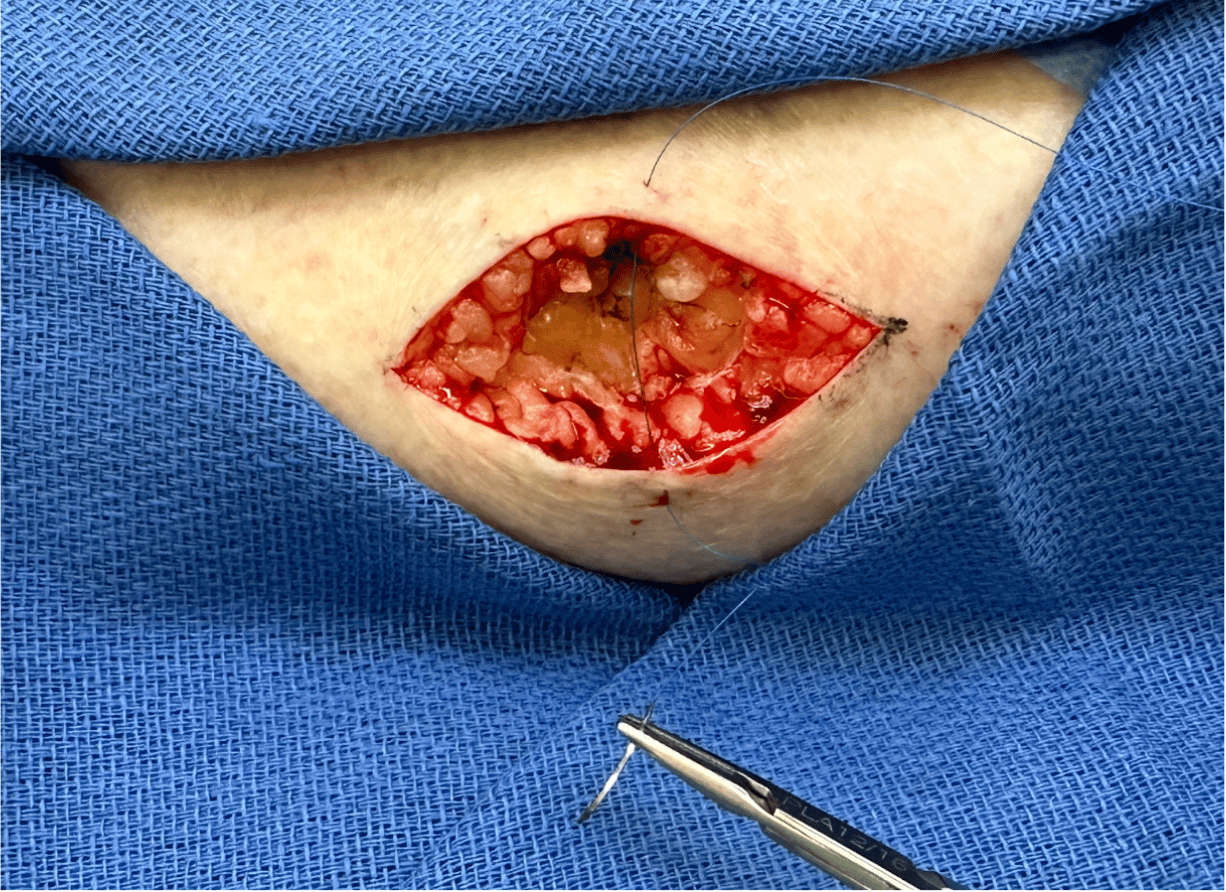
2. Insert another simple interrupted stitch going the other way (you now have a horizontal mattress suture):
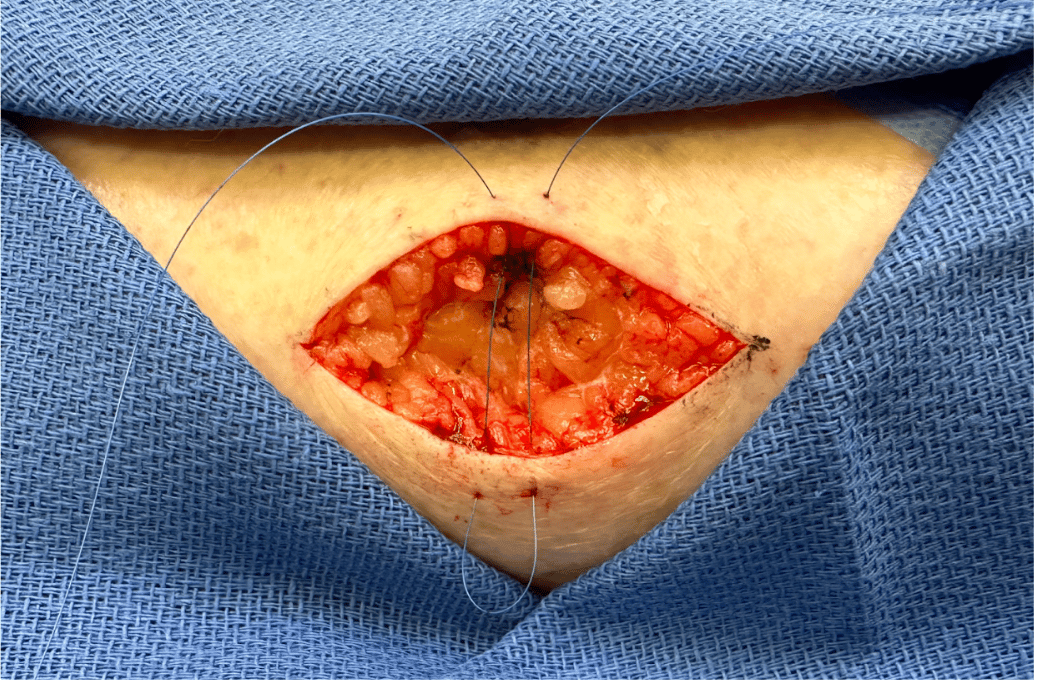
3. Thread the needle through the loop you have made:
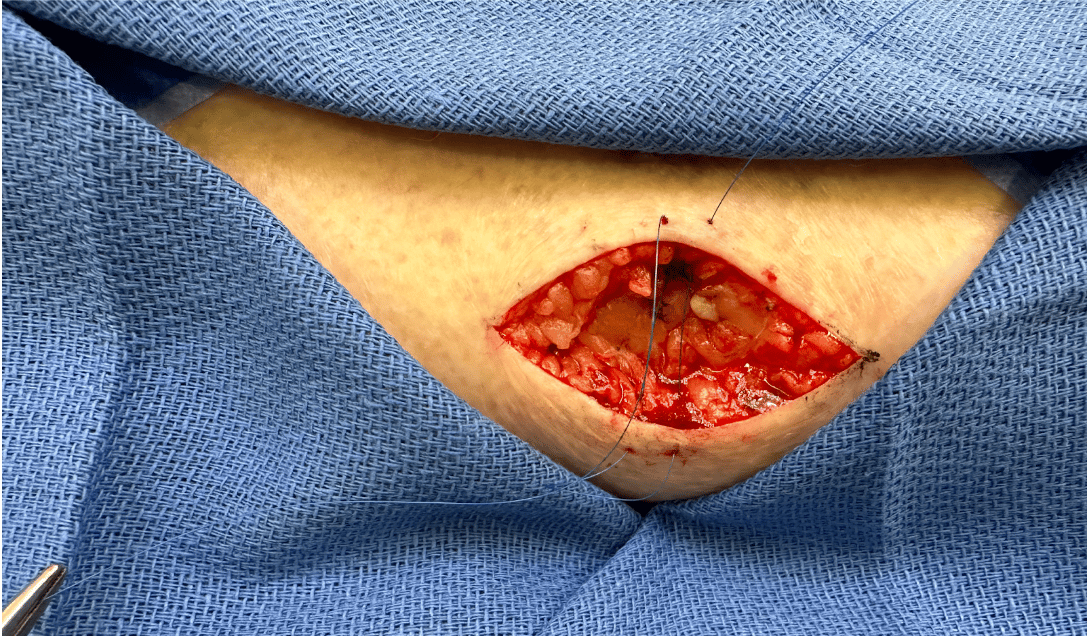
4. Tie the stitch:
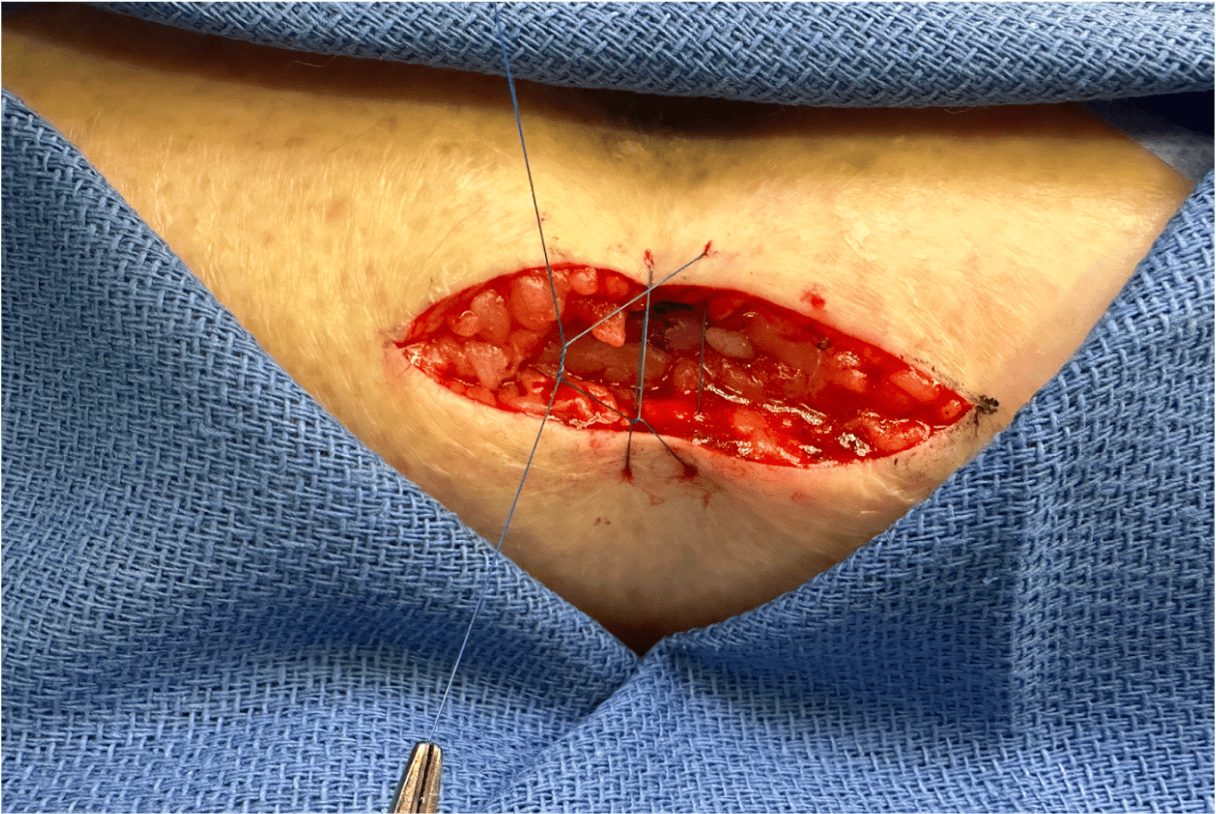
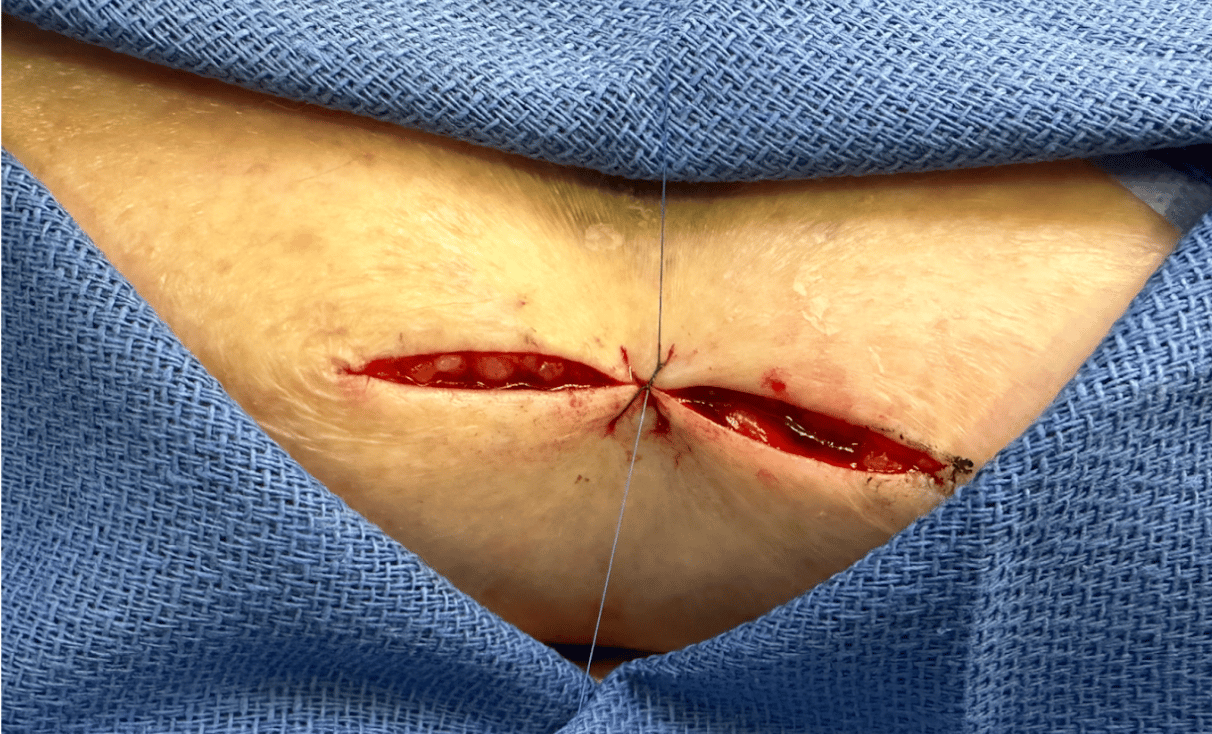
In this case, I was then able to insert some deep dermal sutures on either side of this stitch with 3-0 monocryl. I didn’t want any external sutures, so I removed the ‘get out of jail’ stitch and let the deep dermal sutures hold the wound edges together. I finished off the closure with a subcuticular 4-0 monocryl.
The benefit of this stitch is that all the tension is applied to the loop of the stitch as opposed to the skin. If the wound is really tight, I tie the knot using a slipknot.
Until next time,
NS