A lipoma is a benign (non-cancerous) tumour composed of mature fat cells. These soft, mobile lumps sit just beneath the skin and can occur anywhere on the body - although they are most commonly found on the shoulders, back, arms, and trunk.
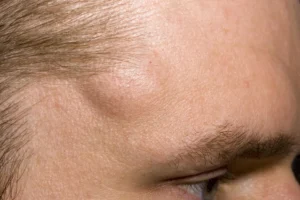
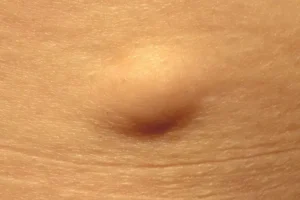
Lipomas grow slowly and typically remain painless, but removal may be recommended or requested when a lipoma:
While lipomas are benign, certain subtypes such as angiolipomas or deep intramuscular lipomas may behave differently, requiring more careful surgical planning.
Dr Schaefer regularly performs benign skin lesion removal procedures at the Brisbane Private Hospital and in his rooms, both located in Spring Hill.
Most lipomas are diagnosed clinically by their characteristic feel: soft, rubbery, and mobile beneath the skin.
Imaging such as ultrasound or MRI may be recommended in certain cases when:
These steps help differentiate benign lipomas from rarer soft-tissue lesions such as liposarcomas, ensuring that surgical treatment is appropriate and safe.
Compared with skin cancer excisions, lipoma surgery is not margin-driven. The entire lump is removed intact, with the surrounding normal tissue being preserved as much as possible.
Lipoma removal can be performed under local anaesthetic or general anesthetic. Larger, deeper, or multiple lipomas usually require general anaesthesia.
During surgery:
Superficial lipomas are typically straightforward to remove. Deep intramuscular or intermuscular lipomas may require more meticulous dissection due to their involvement with surrounding tissues.
Unlike melanoma or SCC surgery, pathology margins are not required, but the removed tissue is routinely sent for histological confirmation to ensure an accurate diagnosis.
Most lipoma excisions allow for direct closure resulting in only a fine-line scar.
When lipomas are large or in cosmetically sensitive areas such as the face or neck, Dr Schaefer plans the incision along natural creases or relaxed skin tension lines to minimise visibility.
Occasionally, for very large lipomas, layered closure is used to improve contour and reduce the chance of postoperative indentation.
Because lipoma defects do not require the wide margins of skin cancer surgery, reconstruction is usually simpler, though thoughtful closure is still required for an optimal cosmetic outcome.
Pathology results confirm the diagnosis and exclude atypical or malignant features.
The risk of recurrence after complete excision is low, particularly when the lipoma’s capsule has been removed in full.
Follow-up includes:
Deep or very large lipomas may require a longer recovery period than small, superficial ones.
Most patients return to normal activities within a few days.
Mild swelling or bruising is expected and settles over 1–2 weeks. Discomfort is usually minimal and managed with simple analgesics.
Postoperative recommendations include:
Because lipomas are benign, ongoing surveillance like that required for BCC, SCC, or melanoma is not necessary.
However, patients who develop one lipoma often develop others over time. If new lumps appear, they should be assessed to confirm that they are consistent with benign lipomas and not another type of soft-tissue lesion.